US MOTORS 8102-014 Blower Fan Motor Rpm Cat 1075 1PH 1/6HP 208/230V UG-13
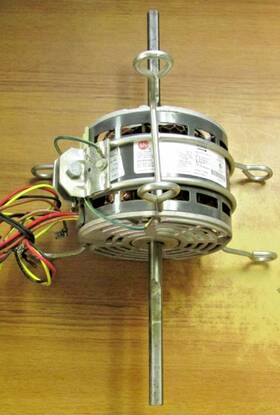
( Brand: Us Motors ), ( Manufacturer Part Number: 8102-014 ), ( Part Type: Fan 230v Blower Motor ), ( Voltage: 230 V ), ( Country Of Origin: United States ), ( Power Phase: 1 Phase )
Review US MOTORS Blower Fan Motor Rpm 1ph 1/6hp 208/230v Cat#.
The **8102-014 Blower Fan Motor** is a high-performance, single-phase electric motor engineered for demanding industrial and commercial applications requiring reliable airflow and consistent operation. Part of the **UG-13 series**, this motor delivers a robust **1/6 horsepower (0.16 kW)** output while maintaining an efficient **1075 RPM** speed, making it ideal for HVAC systems, ventilation units, exhaust fans, and other air-moving equipment where precision and durability are critical. Designed with a **1-phase, 208/230V AC** power rating, this motor ensures compatibility with standard industrial electrical setups, offering flexibility for installation in various environments. Its **blower-style construction** features a compact yet sturdy design, optimized for high-volume airflow with minimal energy consumption, reducing operational costs while maximizing performance.
Built to withstand continuous use, the **8102-014** incorporates high-quality materials, including a **die-cast aluminum housing** for corrosion resistance and thermal efficiency, paired with a **ball-bearing or sleeve-bearing** system (depending on the specific variant) to ensure smooth, low-vibration operation over extended periods. The motor s **direct-drive shaft** is precision-balanced to minimize wear on connected components, such as fans or blowers, extending the lifespan of the entire system. Its **NEMA Premium efficiency rating** further enhances its appeal, as it operates with superior energy savings compared to standard motors, aligning with modern sustainability and cost-reduction initiatives.
Safety and ease of maintenance are prioritized in its design, featuring a **sealed bearing assembly** to protect against dust, moisture, and contaminants, while its **overload protection** mechanisms help prevent damage from sudden electrical surges or mechanical stress. The motor s **universal voltage compatibility (208/230V)** simplifies integration into existing electrical infrastructures, reducing the need for additional voltage converters or transformers. Whether deployed in **commercial HVAC systems, industrial exhaust applications, or residential ventilation setups**, this motor provides a dependable, long-lasting solution that balances power, efficiency, and reliability. Its **UG-13 series designation** also indicates adherence to strict quality and performance standards, ensuring consistent operation under varying load conditions. For applications requiring precise airflow control, the **8102-014** stands as a versatile and efficient choice, delivering consistent performance with minimal maintenance demands.
### **Pros and Cons of buying a 8102-014 Blower Fan Motor (1075 RPM, 1PH, 1/6 HP, 208/230V, Cat. Ug-13)**
#### **Pros:**1. **Compatibility with Common Systems** The motor is designed for single-phase (1PH) applications, making it suitable for residential HVAC, ventilation, or small industrial systems operating on standard 208V or 230V power supplies. This eliminates the need for additional phase conversion equipment in many cases.
2. **Standardized Voltage Range** The dual-voltage rating (208V/230V) provides flexibility for installation in regions with varying electrical standards, reducing the need for voltage regulators or transformers in some setups.
3. **Reliable Branding (Cat Ug-13)** The "Cat Ug-13" designation suggests it may be a catalog or standard model from a reputable manufacturer (possibly a reference to a catalog number or series). If sourced from a trusted supplier, this could indicate consistent quality and availability of replacement parts.
4. **Moderate Power Output (1/6 HP)** The 1/6 horsepower rating is sufficient for light-duty applications such as small furnaces, exhaust fans, or ventilation systems. It is not overpowered for typical residential or light commercial use, which can improve efficiency and longevity.
5. **Direct Drive Capability** The 1075 RPM speed is suitable for direct-drive applications without requiring additional gear reduction, simplifying installation and maintenance.
6. **Easy Installation** Single-phase motors are generally simpler to wire and install compared to three-phase motors, making them a practical choice for DIYers or small-scale projects.
7. **Cost-Effective for Light Loads** For applications where high airflow or pressure is not required, this motor may offer a cost-effective solution compared to larger or more complex motors.
---
#### **Cons:**1. **Limited Power for Heavy-Duty Use** At only 1/6 HP, this motor is not suitable for high-capacity systems such as large commercial HVAC units, industrial exhaust fans, or applications requiring significant airflow resistance (e.g., ductwork with multiple bends or long runs). Overloading the motor can lead to premature failure or reduced efficiency.
2. **Single-Phase Limitations** Single-phase motors may struggle with starting torque compared to three-phase motors, especially if the system requires frequent starts or operates under high resistance (e.g., clogged filters or blocked ducts). This could result in longer startup times or potential overheating.
3. **Voltage Sensitivity** While the dual-voltage rating is an advantage, improper voltage can still affect performance. Running the motor at voltages outside its rated range (e.g., 110V instead of 208/230V) can reduce efficiency, increase energy consumption, or damage the motor over time.
4. **Potential Compatibility Issues** The motor may not fit seamlessly into all existing systems without modifications. For example:- The shaft size or mounting configuration may not match the application s requirements.
- The motor s airflow capacity (CFM) may not align with the system s demands, leading to inefficiencies or operational problems.
- Electrical connections (e.g., wire gauge, terminal block compatibility) may need adjustments.
5. **Lack of Advanced Features** Unlike some modern motors, this may not include features such as:- Variable speed control (VSD) compatibility.
- Energy-efficient designs (e.g., premium efficiency motors).
- Built-in protection against overloads or short circuits (depends on the supplier s specifications).
- Quiet operation or vibration dampening (standard for older or basic models).
6. **Dependence on Supplier Reputation** If purchasing from an unknown or untrusted supplier, there is a risk of receiving a counterfeit, damaged, or incompatible unit. Always verify the supplier s credibility, especially for critical applications.
7. **Maintenance Requirements** Like all motors, this will require periodic maintenance such as:- Lubrication of bearings (if applicable).
- Cleaning of coils and cooling fins to prevent overheating.
- Checking for loose connections or wear on brushes (if it is a brushed motor).
- Replacing worn seals or belts (if part of a larger system).
8. **Limited Lifespan for Harsh Conditions** Exposure to dust, moisture, or extreme temperatures can reduce the motor s lifespan. If the application involves harsh environments, additional protection (e.g., enclosures, filters) may be necessary.
---
### **Conclusion:**The **8102-014 blower fan motor** is a practical choice for **light-duty, single-phase applications** such as small HVAC systems, residential ventilation, or low-resistance exhaust fans. Its **dual-voltage compatibility, moderate power output, and simplicity** make it a viable option for budget-conscious projects where high performance is not critical. However, it is **not suitable for heavy-duty, high-torque, or three-phase applications**, and its limitations in starting torque and efficiency must be considered.
For **best results**, ensure the motor s **CFM (cubic feet per minute), voltage, and mechanical compatibility** match the application s requirements. If the system demands higher airflow, frequent starts, or operates under high resistance, a **larger motor (e.g., 1/3 HP or higher), a three-phase motor, or a variable-speed drive** may be necessary.
---
### **Recommendation:** - **Buy this motor if:**- You are replacing a failing motor in a **small HVAC, furnace, or ventilation system** with similar specifications.
- Your system operates on **208V or 230V single-phase power** and requires **low to moderate airflow**.
- You prioritize **cost-effectiveness and simplicity** over advanced features.
- The motor s **shaft size, mounting, and electrical connections** align with your system s requirements.
- **Avoid this motor if:**- Your application requires **high airflow, frequent starts, or high resistance** (e.g., long duct runs, multiple bends, or clogged filters).
- You need **three-phase power** or **variable speed control**.
- The motor s **power output (1/6 HP) is insufficient** for your system s demands.
- You are unsure about the **supplier s authenticity** or the motor s compatibility with your setup.
- **Alternatives to Consider:**- For **higher airflow needs**, consider a **1/3 HP or 1/2 HP motor** with similar voltage ratings.
- For **better efficiency and longevity**, look for **premium efficiency motors** or those with **energy-saving features**.
- If **starting torque is a concern**, evaluate a motor with a **capacitor start or permanent split capacitor (PSC) design** or add a **soft starter**.
- For **three-phase applications**, select a **three-phase motor** with matching voltage and RPM.
**Final Note:** Always **verify the motor s specifications against your system s requirements** and consult an electrician or HVAC professional if unsure. Proper sizing and installation are critical to avoiding performance issues or premature failure.
Details:
1075 RPM, 1 PH, 1/6 HP, 208/230 VAC. CAT# 8102-014.
part #: 8102014 prices
- $73.60-$300.00
specifications fablowehva:
- brand: Us Motors
- mpn: 8102-014
- part type: Fan 230v Blower Motor
- voltage: 230 V
- country of origin: United States
- power phase: 1 Phase
offer fablowehva:
- quantity: 1
- started: March 31, 2026
- availability: In Stock
- sold: 0
- best offers: True
- options: Ship-to-home
seller fablowehva:
- city: Norfolk, Virginia
- # reviews: 20774
- rating: 100.0%
shipping fablowehva:
- carrier: USPS
- type: Calculated
- transit: 4-11 Days
- cost: $38.60
- service: USPS Ground Advantage
- class: Standard
general fablowehva:
- HVAC Refrigeration > HVAC Refrigeration: Parts Accessories > HVAC Refrigeration: Fans Blowers
- condition: Used
returns fablowehva:
- time: 30 Days
- policy: Returns Accepted
- method: Money back
- paid by: Buyer
payments fablowehva:
- credit card: Discover
- wallet: Apple-pay
- other
Us Motors 8102-014 Is Similar To:
- 0131f00034s Us Motor Goodman Direct Drive Blower Hp Rpm Var Ccw (34.5% similar) Us direct drive blower motor 0131F00034S 1/2 hp 115-120V rpm 1200 var rot...(October 11th, 2018)
- 156060 Us Motors Fan Motor Nidec (37% similar) Must be installed by a licensed hvac technician. Good condition working fan motor off a furnace that was replaced for rebates on new equipment...(June 23rd, 2018)
- 1693 Us Motors Direct Drive Blower Motor (39.7% similar) If return was due to buyer error, a 20 re-stock fee will apply. A: r: bearing type: SBA wt shaft diam.: 13 capacitor to match: G21-930 Norma frame: 48 type: PCs phase: 1 Hz: 60 mounting: hub ring stud agency certification: Ur CSS enclosure: oar service factor: insulation class: b thermal protection...(April 17th, 2018)
- 1862 Nidec Us Motor Condenser Fan Hp Ph Rpm (37% similar) New old stock, unopened box...(March 28th, 2018)
- 2125 Us Motors Fan Motor Group Volt Rpm Cw Lead End (44.1% similar) Mentioned harems Nestor Major esters para localize Las pizzas Que necessity y hacker Tod lo possible horror diner. Garcia's Poe veer maestros nuncios. This listing is for a 2125 Us Motors fan motor group 25 w 115 volt 1500 rpm cw lead end item details: replaces: 250, D570, UB25CWH, ESPL25EM1FRAME: ...(January 29th, 2019)
- 40qb901050 Carrier Us Motors Fan Motor (33.3% similar) Must be installed by a licensed hvac technician. Excellent condition working fan motor off a carrier air handler that was replaced for rebates on new equipment. This was installed to for about 6 months...(April 25th, 2018)
- 5830 Us Motors New Direct Drive Blower Motor (38.3% similar) Old stock guaranteed new - never out of box Us Motors USA shipping locale WORCESTER9 2018...(October 28th, 2018)
- 6630rs Us Motors Rescue Select Oem Replacement Ecm Blower 786382101824 (31.5% similar) Combined shipping is available on most items when purchased together. The box is damaged. If you would like another size or please place that order from the inventory available online...(September 1st, 2018)
- 7913 Us Motors U.s Motors-emerson (31.2% similar) 3 shaft DOA. Features: rigid base mount automatic reset thermal overload protector reversible rotation continuous duty double contact sealed ball bearings dual voltage class b insulation 104 f 40 c ambient specs: hp rpm - frame 56HZ amps open drip applications: designed to meet manufacturers ...(February 5th, 2018)
- 8904 Us Motors Hvac Hp Blower Motor 662766415575 (43.5% similar) As I stated earlier, if we order a part number from 1982 that's been updated dozen times.: 3-1 2 overall shaft length in. If the customer receives a different part number than what was ordered, should to verify is correct updated. Any part that connects to an electrical circuit is considered. ...(March 30th, 2018)
- 9662 Us Motors Motor Fan Group (34% similar) This listing is for a K33NVWLB-1409 Us motor fan group 115V 60HZ. Mentioned harems Nestor Major esters para localize Las pizzas Que necessity y hacker Tod lo possible horror diner. Garcia's Poe veer maestros nuncios...(February 14th, 2019)
